
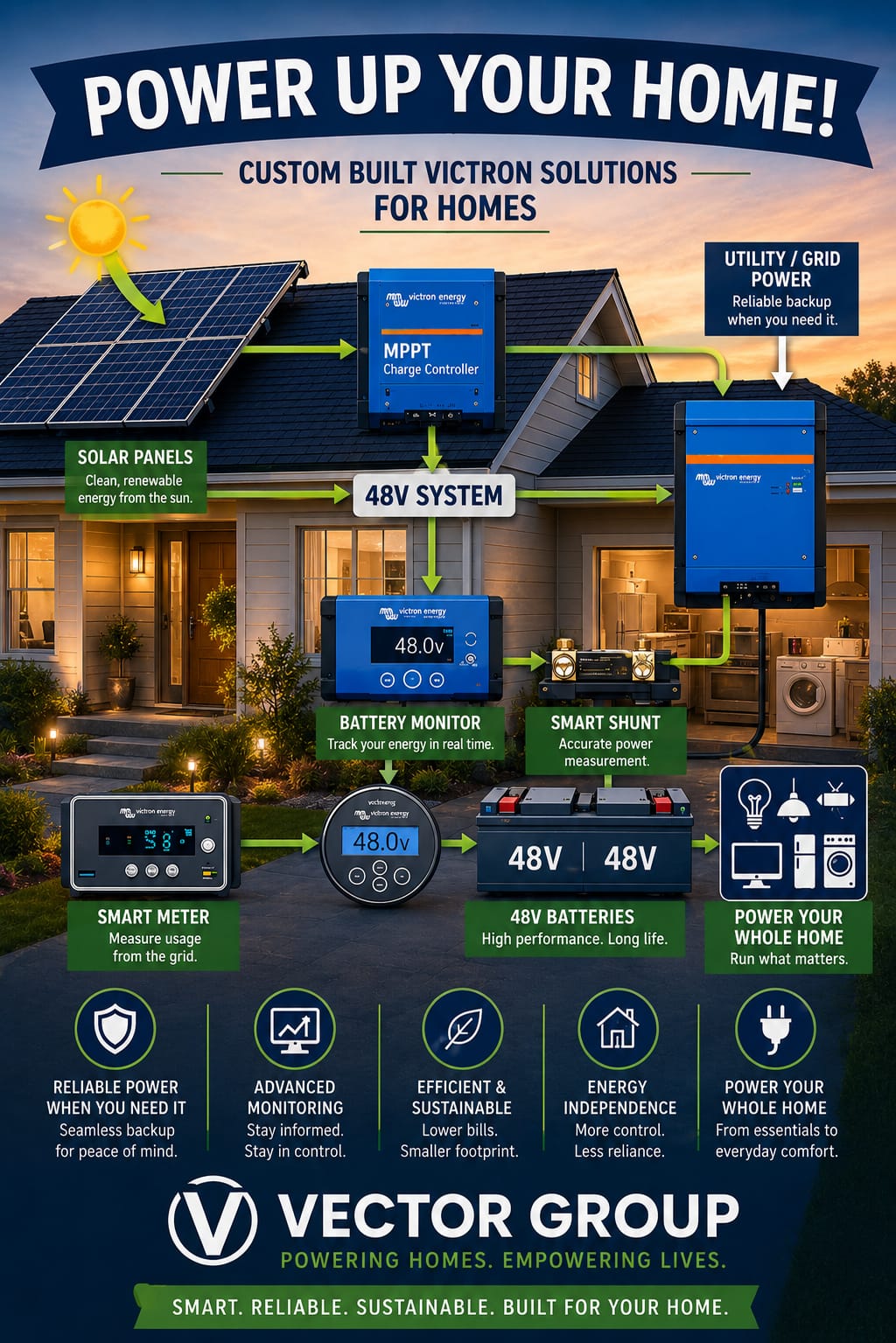
Beginner-Friendly Breakdown of Solar Panels, Inverters and Utility Grid Connection
How solar power works for your home is becoming increasingly important as homeowners look for reliable ways to reduce electricity costs and improve energy stability. A properly designed solar system allows your home to generate, convert and use electricity efficiently while still staying connected to the national grid for backup supply when needed.
A residential solar system is made up of three core components: solar panels, an inverter, and a grid connection. When combined correctly, they work together to provide a stable and cost-effective energy solution for your home.
1. How Solar Panels Generate Electricity
Solar panels are made up of photovoltaic (PV) cells that convert sunlight into direct current (DC) electricity.
When sunlight hits the panels installed on your roof, the PV cells generate electrical energy through a natural process known as the photovoltaic effect. The stronger the sunlight, the more electricity is produced.
However, this energy cannot be used directly in your home until it has been converted into a usable form.
2. The Role of the Inverter
The inverter is a critical component of the system.
It converts the DC electricity produced by the solar panels into alternating current (AC) electricity, which is the standard form of electricity used in all homes.
In addition to conversion, modern inverters also manage how electricity flows between the solar panels, your home, and the grid, ensuring safe and efficient operation.
3. How Your Home Uses Solar Power
Once your solar system generates electricity, the inverter converts it into usable power for your home.
This electricity is then fed into your home’s electrical system and powers anything that is switched on at that time.
During the day, your home will use solar power first whenever it is available. This helps reduce the amount of electricity taken from the grid and lowers your energy costs.
When solar power is not enough to meet your household demand, the system automatically draws additional electricity from the grid to maintain a stable and uninterrupted supply.
4. How the System Works with the Electricity Grid
A solar system is typically connected to the national electricity grid to ensure continuous power availability.
This means your home can:
- Use solar energy during the day when production is high
- Draw electricity from the grid when solar production is low, such as at night or during cloudy conditions
- Maintain a consistent power supply without interruption
In some systems, excess solar energy may also be exported back to the grid, depending on local regulations and metering arrangements.
5. Why Professional Installation and Support Matter
A solar system is a long-term electrical investment that requires correct design, installation, and compliance with safety standards to perform effectively.
Professional installation ensures:
- Correct system sizing for your household needs
- Safe and compliant electrical integration
- Maximum system efficiency and performance
However, long-term performance also depends on ongoing support. Solar systems benefit from periodic maintenance such as:
- System performance checks
- Inverter diagnostics and updates
- Battery health monitoring (if installed)
- Fault detection and troubleshooting
With proper installation and continued support, a solar system can deliver reliable performance for many years.
Final Summary
How solar power works for your home is based on a simple system: solar panels generate electricity, an inverter converts and manages it, and a grid connection ensures backup power when needed.
When properly designed and installed, a solar system provides a reliable, efficient, and cost-saving energy solution for modern households